
Best betting sites in the UK for 2026: what licensed bookmakers actually cost
 Available in US
A bookmaker serving customers in Great Britain needs a Gambling Commission licence wherever it is based. That single rule, set out in the Gambling Act 2005 as amended by the Gambling (Licensing and Advertising) Act 2014, decides who can take a bet from a British punter and on what terms. Everything else — the welcome offer, the in-play price, the payout time, the cash-out slider — sits inside that licence and the Licence Conditions and Codes of Practice that come with it. The page below looks at ten licensed bookmakers through that lens, comparing what each one costs the person paying for it.

The current snapshot is 27 October 2026, verified against the Gambling Commission’s public register.
The new bookmakers that broke cover
A small group of brands have joined the Commission’s register in the past year or so, and a wider group has refreshed its UK-issued app and site. The list below is not a ranking; it is what each operator’s own published terms state at the snapshot date. Several of these names will be unfamiliar, and unfamiliarity is exactly the point at this end of the market — a bettor weighing them has to check the licence and read the small print rather than trust a familiar logo.

The newest operator on this list is Silkbet Limited, which holds three remote licences under the same Commission account number 101183, active since 7 May 2026, covering casino, real-event general betting and virtual-event general betting. Greenlight Bet sits at the opposite end of the same window: its domain still shows a “Launching Soon” placeholder with a contact form and an email sign-up, and no offers, payment methods or licence text. The contrast is the cleanest illustration of what “new” can mean on this register — a brand that holds licences and is taking bets, beside a brand that has announced itself and is not.
Lottoland UK is the household outlier in this bracket. Its app combines casino, lottery betting, sports betting and scratchcards, and it states it is licensed by the Gambling Commission for customers in Great Britain. The combination is unusual: most licensed bookmakers run sports only, or sports and casino, and lottery betting on its own sits under a different licence category. Midnite is the brand whose licence is recent and whose product is squarely modern: it cites Commission licence 101839 and lists in-play events, an acca builder, popular accas and price boosts with maximum-stake limits. Kwiff describes itself as a trademark operated by Spryme Ltd, is licensed by the UK Gambling Commission, and carries a 17+ age rating in the App Store.
BetWright is a brand that states it is licensed in the UK, provides responsible gaming tools, and requires customers to be 18 or over. London Bet, published by Thistle Bet Limited, makes the same three claims. BetMGM UK is published by LeoVegas Gaming p.l.c. and lists Commission account 39198; the international brand’s UK app is a relatively new addition to the register. The point common to all eight: each one is verifiable on the Commission’s public register, and the register is the whole test. No marketing claim replaces it.
A punter who prefers a brand with a long operating history in Britain will not find one in this group. A punter who wants a product shaped around in-play and accumulators will. The question to ask of any of them is not whether it is new but what licence it holds, what the small print on the welcome offer costs in turnover, and how a withdrawal will actually arrive.
Shortlist of the best betting sites in the UK
The ten bookmakers below are the shortlist this page works through. The order is the order in which they are reviewed, not a ranking by quality: an offer that suits a small-stake punter placing football accumulators is not the same offer that suits a horse-racing each-way backer. What each entry states is drawn from the operator’s own published terms at the snapshot date, and the Gambling Commission’s register is the cross-check for every licence claim.
- Coral — the UK high-street stalwart with the simplest headline welcome offer on this list.
- NetBet — a long-running licensed bookmaker whose UK product leans into bet builders and price boosts.
- Fitzdares — a premium-positioned bookmaker with a narrow payment-method set and same-day Visa payouts.
- Spreadex — the only operator on this list licensed for both fixed-odds and FCA-regulated financial spread betting.
- Paddy Power — a brand with a deep sportsbook and the most generous money-back specials in the market.
- Fitzwilliam Sports — a smaller licensed brand whose site foregrounds safer-gambling tools.
- QuinnBet — a Gibraltar-licensed bookmaker whose free-bet terms have some of the strictest price floors on the list.
- Betmaster — a Malta-domiciled licensee with a four-card payment set and an emphasis on safer-gambling controls.
- Copybet — a UK-licensed brand built around following other punters’ bets.
- bet365 — the market’s dominant bookmaker, official global betting partner of the UEFA Champions League and the most downloaded sports betting app in the UK.
| Brand | Licence and Holder | Key Features |
|---|---|---|
| Coral | 54743 (LC International) | £40 in free bets for £20 |
| NetBet | 39170 (Netbet Enterprises) | Daily Boosts and Profit Boosts |
| Fitzdares | 400 (Fitzdares Ltd) | Premium positioning |
| Spreadex | 8835 (Spreadex Ltd) | Spread betting and fixed odds |
| Paddy Power | 39439 (PPB Counterparty) | Money-back specials |
| Fitzwilliam Sports | 48760 (SBKI Ltd) | Safer-gambling tools |
| QuinnBet | 61011 (QuinnBet Gibraltar) | Free bets with 50/1 limit |
| Betmaster | 65699 (BM Solutions) | Safer gambling controls |
| Copybet | 53774 (Copybet UK) | Tipster-following platform |
| bet365 | 55148 (Hillside) | Deepest product range |
How to read this list: pick the brand whose profile matches the kind of betting you do, then check the licence number against the Commission’s site before depositing. Two brands can run under one licensee — for example Ladbrokes and Coral both sit under LC International Limited, and Paddy Power and Betfair both sit under PPB Counterparty Services Limited. The brand on the shirt is not always the company behind the licence.
Fundamentals of betting in the UK
Three rules cover almost every situation a punter meets at a licensed UK bookmaker, and they are worth learning once because they recur in every section below.

The first is age and verification. A customer must be 18 or over, and a licensed bookmaker must verify name, address and date of birth before the first deposit is accepted, including when the first product is a free bet or a bonus. The verification requirement took effect on 7 May 2019 and applies at every operator on this list. Anonymous play is not available at any licensed site; offshore brands offer it and pay for that offer in lost British consumer protections.
The second is the bonus cap. Since 19 January 2026 wagering requirements on bonuses are capped at 10x. A £10 bonus with a 50x turnover would have demanded £500 of qualifying bets; under the cap no operator may demand more than £100 of qualifying bets for that bonus. Mixed-product promotions — an offer that requires gambling on two or more product types such as betting, casino, bingo and lottery, for example “bet on football to get free spins” — are banned outright. The cap is a Commission licence condition; an offshore brand is not bound by it.
The third is the player-pays-no-tax rule. Betting winnings in Great Britain are not taxed in the player’s hands. General Betting Duty is the operator’s tax on gross profits, currently 15%; from 1 April 2027 a new remote betting rate of 25% applies within it, while remote bets on UK horse racing, bets on self-self-service betting terminals in licensed premises, pool betting and in-person betting stay at 15%. The duty sits in the operator’s margin. It is never itemised on a betting slip and never deducted from a payout, and a reader who bets professionally should ask HMRC or an adviser rather than rely on that general position.
These three rules define the British licensed market. They are also the reason an unlicensed site can offer bigger bonuses or looser verification: it is not subject to any of the three, and the customer is not protected by any of them either.
The statute, the regulator and what the licence means
The Gambling Commission is a non-departmental public body sponsored by the Department for Culture, Media and Sport. It licenses the whole commercial market under the Gambling Act 2005, which covers Great Britain (England, Scotland and Wales). Northern Ireland sits outside the Act and runs under its own older law; a bookmaker described as “GB-licensed” is licensed for England, Scotland and Wales and not for Northern Ireland. The Act creates five betting licence categories: remote general betting standard (real events), remote general betting standard (virtual events), remote general betting limited, remote pool betting and remote betting intermediary (the licence for betting exchanges). Every brand on the shortlist above holds a remote general betting standard (real events) licence; bet365 also operates a betting intermediary licence under the same Commission account.

Since the Gambling (Licensing and Advertising) Act 2014 the test is no longer where the operator is based but whether its remote facilities are used in Great Britain. An operator whose servers sit in Malta, the Isle of Man or Gibraltar still needs a Commission licence to take a bet from a British punter. Sections 33 and 36 of the 2005 Act, as amended, set out the offence of providing gambling facilities without the licence the Act requires, and the Commission can bring proceedings against an unlicensed operator on summary conviction for up to 51 weeks’ imprisonment, a fine up to level 5, or both, with six months in Scotland. There is no statutory cap on the number of licences; the Commission grants them against fitness, financial standing and the LCCP. The market is open but it is not unregulated.
The Commission’s public register can be searched by business name, trading name, domain or account number. It is the whole test of whether a brand holds a licence. A foreign licence is not a substitute. Licensed operators use .com as well as .co.uk, so the domain proves nothing. A punter who wants to verify the claim made by any brand on this list types the licence number into the Commission’s register search and confirms the licence category and the licence holder.
Wellbeing, limits and the rules that govern a UK betting account
The licence conditions that govern a player’s interaction with a UK bookmaker are tighter than the conditions that govern a deposit. They cover safer-gambling tools, financial checks, self-exclusion and advertising, and they apply to every operator on the shortlist above.
GAMSTOP is the national multi-operator online self-exclusion scheme and has been a mandatory licence condition for online operators since 31 March 2020. The exclusion periods are six months, one year, five years, or five years with auto-renewal, and after the minimum period the exclusion remains in force for a further seven years unless the customer asks GAMSTOP to remove it. GAMSTOP covers online sites and apps; high-street betting shops use a separate service. A punter who has self-excluded cannot open an account at any licensed online bookmaker, and the brand cannot override the exclusion.
Deposit limits are a Commission requirement, not a state-set ceiling. Operators must offer a gross deposit limit on a fixed time frame; the first changes have applied since 31 October 2025, a second phase was postponed to 30 September 2026, and whether that second phase is live at the snapshot date is not established. There is no state-set deposit or loss ceiling for betting; the limit is the customer’s choice. The financial vulnerability check applies to licensed remote betting when a customer’s deposits minus withdrawals exceed £150 in a rolling 30 days (since 28 February 2025). It is a public-record check (for example bankruptcy or county court judgments), not an income check and not a credit reference check. Wider financial risk assessments (the “affordability checks” of the press) were announced by the Commission in a staged plan on 7 July 2026, with no start date.
Help is available outside the operator. GamCare runs the National Gambling Helpline. GambleAware funds treatment and research. NHS gambling clinics offer face-to-face support. Gamblers Anonymous runs peer-led meetings. Unibet’s safer-gambling page links to BeGambleAware, GamCare, GAMSTOP, Gambling Therapy and the Betting and Gaming Council; Fitzwilliam Sports links to GambleAware, GamStop and Gamblers Anonymous; Midnite links to GambleAware, GamCare, GamStop and BetBlocker. The links are not the same on every site, and that is the point: a punter who wants help should pick the route that suits them, not the route the brand prefers.
A punter’s obligation under the framework is small but firm: be 18, pass the identity check before depositing, respect any self-exclusion that is in place. A punter’s protection is large but conditional: the 10x bonus cap, the GAMSTOP coverage, the Commission’s complaints route, the approved dispute-resolution bodies — all of these apply because the operator holds the licence. An unlicensed site offers none of them.
Crypto, anonymity and the licensed-market reality
There is no licensed UK bookmaker that takes cryptocurrency deposits without identity verification. The Commission’s verification requirement sits upstream of any payment method: a customer must pass name, address and date-of-birth checks before a first deposit, whatever the deposit is in. An unlicensed brand can offer bitcoin deposits and pay for that offer in lost British consumer protections — no GAMSTOP coverage, no Commission complaints route, no approved dispute-resolution body, no British consumer redress if a payout is withheld. The honest framing is not “crypto betting is banned in the UK” but “a licensed UK bookmaker that takes bitcoin without checking who you are does not exist, and a brand that takes bitcoin without checking is not licensed”.
The figures that come with that reality: the Commission has powers to disrupt unlicensed operators, including cease-and-desist notices, search-engine referrals, work with registrars, hosts and payment providers, and court-order DNS blocking powers that the Commission has been given or is about to receive. ISP blocking is not in operation. A punter who seeks a brand with no verification, no protection and a crypto balance has several options on the open internet; none of those options are on this page because none of them are licensed.
The cluster of search terms around crypto and anonymity is a sign of demand, not a sign of supply. The licensed UK market serves the demand by saying clearly what it does and does not do. Identity is checked. Money-laundering rules apply. Cryptocurrency is not on the standard payments page of any brand reviewed here. A reader who needs anonymity at the cost of every protection listed above will find it elsewhere; a reader who wants the protections will find them at every brand on the shortlist.
Incentives, bonuses and what they cost
The welcome offer is the front door of a UK bookmaker, and the small print behind it is the actual price. Three concepts cover most of the cost.
A free bet is a stake the operator credits to the customer’s account. It is usually paid out as winnings only — the stake itself is not returned. A £10 free bet at evens pays £10 of profit, not £20 of return, and a £10 free bet at 3/1 pays £30 of profit, not £40. The stake is gone either way. The value of a free bet depends on the odds it is placed at and on the margin of the market it lands in. Coral’s sports welcome offer is “Get £40 in Free Bets when you bet £20”: a deposit and sports bet of £20 or more at minimum odds of 2.0 (1/1), with £40 in free bets issued within 7 days and expiring 7 days after issue, for new GB customers who opt in. QuinnBet’s free bets are valid for 7 days from credit, can be used on any market at odds of 1/2 (1.5) or greater, with maximum odds of 50/1; straight accumulators are allowed but Trixies, Patents and Yankees are not.
A bonus is a credit the operator adds to a deposit, almost always with a turnover requirement. A £10 bonus at 10x turnover requires £100 of qualifying bets. Under the Commission’s 19 January 2026 cap no operator may demand more. The phrase “10x turnover” reads well in marketing; it means the punter has to bet ten times the bonus before any winnings become withdrawable. The bonus itself is rarely withdrawable.
A price boost or enhanced odds is an offer that raises the price of one outcome for a stake window. NetBet lists Daily Boosts, Profit Boosts and free bet offers on its app. bet365 offers Super Boosts, Winnings Boosts on Bet Builders and selected singles, and daily Bet Boosts. These offers look like generosity and behave like marketing: the boosted price usually comes with a maximum stake, and the maximum stake is set so the offer is unprofitable for the operator at any reasonable volume. Paddy Power’s money-back specials are the best-known version: a stake on a particular outcome is returned as a free bet if a particular event happens (a goal, a red card, a defeat from two goals up). The refund is a free bet, not cash, and the stake disappears.
The point common to every offer on the shortlist: read the small print, count the turnover, note the expiry, and accept that the headline figure is the marketing number, not the number that lands in the account. A punter who chooses an offer by headline value alone pays for that choice in time spent clearing conditions the offer never mentioned.
Cashier, payments and the speed of a withdrawal
The payment-method set at a UK bookmaker is set by the operator and constrained by Commission licence conditions, but the customer-facing reality is that the fastest payouts go through Visa and PayPal and the slowest through bank transfer. Credit cards have been banned for gambling in Great Britain since 14 April 2020 (LCCP condition 6.1.2), including credit-card-funded payments through an e-wallet. Debit cards and bank-based payments are not covered by that ban.

Fitzdares accepts Apple Pay, Mastercard and Visa; Visa withdrawals are usually same-day, while Mastercard withdrawals can take up to 48 hours. bet365 accounts can be funded by debit card, PayPal and Apple Pay, and the app supports Face ID login on supported devices. Midnite accepts Visa, Mastercard, Apple Pay, Google Pay and Trustly. Betmaster accepts Visa, Mastercard, Maestro and V PAY. The list is short and the choices are real: a punter who wants Apple Pay will find it at three of the ten brands above; a punter who wants Trustly will find it at one.
The fastest withdrawal is the one that goes through a method already set up before the win. Withdrawal verification — the check that the punter is the punter and the bank account is the bank account — is what delays most payouts, and the delay is the same whether the withdrawal is £10 or £10,000. The first withdrawal after a deposit usually takes longer than subsequent ones because the deposit method has to be matched and the account has to be cleared. Once the verification is done, Visa and PayPal typically pay out the same day; Mastercard can take up to 48 hours; bank transfer sits at one to three working days at most operators.
Punters looking for instant withdrawals will not find them at every brand. Trustly, where offered, sits close to instant. The term “instant withdrawal” in marketing is the operator’s word, and the operator’s word on a payout time is the worst place to take an advertised promise from. The register, the bank statement and the test withdrawal are the three cross-checks.
The mobile app and the touchscreen experience
The betting app is the betting site for most UK punters, and the Commission’s rules treat it as a betting site. The LCCP and the Remote Technical Standards apply to the app on the same terms as the desktop site; the age gate, the verification, the deposit limit, the safer-gambling links all sit inside the app.
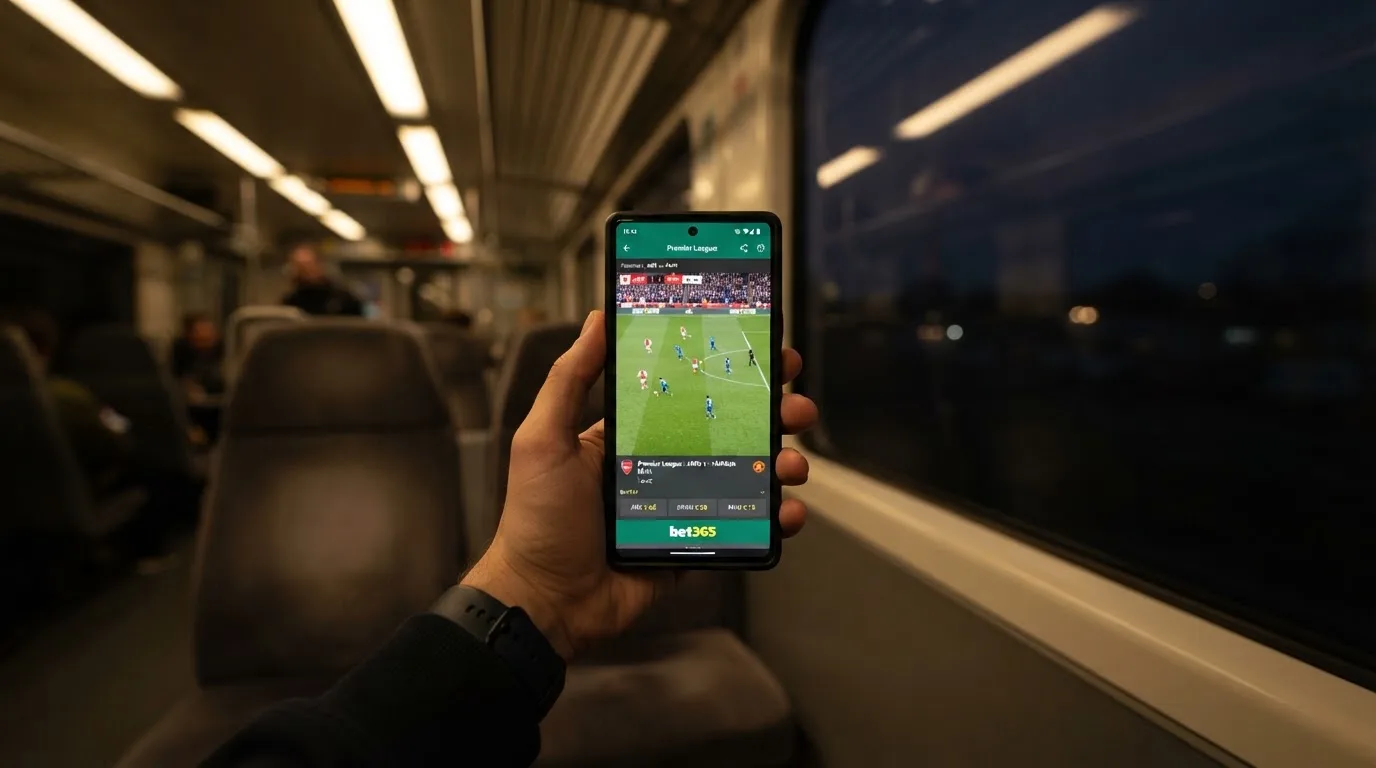
bet365’s app is described in its App Store listing as the most downloaded sports betting app in the UK and supports Face ID login on supported devices. The Paddy Power Sports Betting app offers the deepest sport coverage on this list. Fitzdares’ App Store listing frames it as “Premium Betting”, consistent with the brand’s premium-positioned marketing. Lottoland UK’s app combines casino, lottery betting, sports betting and scratchcards. Midnite, NetBet, Betmaster, QuinnBet, Copybet, BetMGM UK, 10bet, Kwiff, BetWright, London Bet and Fitzwilliam Sports all have GB App Store listings; the rating varies, but every one is reachable through the standard Apple distribution channel and verifiable from the listing.
The cost of a poorly designed app is paid in time: an in-play bet placed five seconds late is the same bet at a worse price. The cost of a well-designed app is paid up front: a quick login, a clear bet slip, a fast withdrawal. Mobile betting apps and web design are not a topic this page judges, because the judgement is the punter’s. The single piece of practical advice: open the app before depositing, place a small wager, request a small withdrawal, and see how the whole loop runs before committing a bankroll.
In-play, cash out and the moment of the bet
Live betting at a UK bookmaker is offered under the operator’s licence conditions and customer-protection duties. There is no statutory prohibition on in-play; there is no statutory permission that allows it without those duties. bet365’s app offers in-play betting and live streaming of events worldwide, plus Bet Track, Match Live and a Live Golf Tracker for following bets in play. Midnite lists in-play events on its home page. bet365 also offers Bet Builder+, which combines markets from one event into a single bet, available pre-match and in-play. The combinations are a different product from the singles; the price of a Bet Builder+ leg combination is a different price from the same legs taken as singles.
Cash out is the function that lets a punter close a bet before the event has finished. It is offered at the operator’s discretion and at a price set by the operator. The price is not the same as the price of placing the same bet on the exchange; it is the operator’s price for taking the bet back. Punters who use cash out regularly should keep a record of the cash-out price against the price of leaving the bet to settle, because the cash-out price is built to favour the operator over many uses.
The “live betting sites uk” cluster of search terms points at one specific question: which bookmaker offers the most in-play markets and the best in-play prices. The honest answer is that in-play margin is higher than pre-match margin at every bookmaker, because the bookmaker’s information advantage is larger in-play and the punter’s time to compare is shorter. A punter who bets in-play accepts that the price they see is the price they get, and that the cash-out slider is not a friend. A punter who bets pre-match can shop the price across operators and is the better served by doing so.
Predictions, strategy and the limits of forecasting
Betting prediction sites and tipster sites are a category of UK web traffic in their own right, and a punter who follows them needs to know what they actually buy. A tipping service sells opinion; the opinion may be well-researched or poorly researched, but the sale is the same. No tipping service can predict an outcome, because no one can. A service that claims a strike rate of 70% is selling a number, and the number is unverifiable without access to the service’s complete settled-bet history. The honest framing: a tipping service is entertainment with a price tag, and the price is the subscription.
Strategy in a betting context is bankroll management, not prediction. A punter who sets a stake as a fixed percentage of bank, holds the percentage steady through losing runs, and stops when the stop-loss is hit will outlast a punter who chases losses with bigger stakes. The mathematics of bookmaking work against the punter at every market and at every margin; the punter’s only edge is discipline. A bookmaker’s margin sits inside every price, and the margin compounds across accumulators because the legs multiply. A punter who takes ten singles at a 5% margin loses 5% of turnover on average; a punter who takes the same ten outcomes as one ten-fold accumulator loses a substantially larger share because each leg carries its own margin and the margins multiply.
The cluster of search terms around predictions and strategy points at the same answer from two directions. A punter who wants to win more has to bet less, at sharper prices, on markets with low margin; a punter who wants to enjoy the betting has to keep the stake small, accept the margin, and stop when the fun stops. The two routes are not incompatible, but they require the punter to know which route they are on.
Bet types, odds and what a price actually pays
A single is a bet on one outcome. A double is a bet on two outcomes, both of which must win. A treble is a bet on three. An accumulator (“acca”) is a bet on four or more, all of which must win. The odds multiply: a double at 2/1 and 3/1 returns a stake multiplied by the combined odds (3.00 × 4.00 = 12.00), so a £10 double returns £120. An each-way bet is two bets of equal stake — one on the win, one on the place — so the stake doubles and the place terms vary by race and by operator.
A bet builder is a bet constructed from multiple markets on the same event. NetBet’s Bet Builder with instant dynamic odds is one example; bet365’s Bet Builder+ is another, combining markets from one event into a single bet, available pre-match and in-play. The price of a bet builder is the product of the leg prices, less a margin the operator takes for combining them. A punter who builds the same combination as singles loses less to margin; a punter who uses the bet builder pays for the convenience.
A betting exchange runs under a betting intermediary licence — the fifth licence category under the Gambling Act 2005. At an exchange punters back and lay against each other; the operator takes a commission on net winnings. The exchange offers prices that are often sharper than the bookmaker’s because there is no built-in bookmaker margin, only the commission. The Commission account for an exchange is identifiable on the register; the rates and rules are stated only from each exchange’s terms.
Spread betting is a different product again. Spreadex is regulated by the FCA for spread betting and by the Gambling Commission for fixed-odds betting, and the operator’s own homepage states that spread betting losses can exceed the deposit. Spread betting is not a bet at fixed odds; it is a bet on whether the outcome will be higher or lower than a quoted spread, and the punter wins or loses per unit of movement. A punter who is new to spread betting should treat it as the operator treats it — a product whose losses can exceed the stake.
A worked example of a single’s return, useful to keep in mind when an offer looks generous: at decimal odds of 3.00 (2/1 in fractional), a £10 stake returns £30 — £20 of profit plus the £10 stake returned. At decimal odds of 1.50 (1/2), a £10 stake returns £15 — £5 of profit plus the £10 stake. The return is stake × odds; the net profit is stake × (odds − 1). For an accumulator the odds of the legs multiply into one price, and the same arithmetic gives the total return.
Sports, tournaments and the calendar of the year
The sport coverage of the UK licensed market is the broadest in the world, because the Commission places no statutory list of permitted bets or markets and an operator offers markets under its own rules and the LCCP. The Paddy Power app covers football, horse racing, boxing, rugby, tennis, golf, darts, snooker and F1. bet365 is the official global betting partner of the UEFA Champions League and offers live streaming of events worldwide. Football, horse racing and tennis are the three sports that no operator omits; the long tail — darts, snooker, F1, rugby, boxing, golf — is well covered at the major operators and patchy at the smaller ones.
Esports are treated like any other event. Virtual events are a separate licence category. Bets on politics, TV shows and novelty markets are offered by GB bookmakers and no statutory prohibition was found. A punter looking for a niche market should check the operator’s site rather than assume the market is there; the niche market is sometimes priced sharply because the operator’s information advantage is large.
The calendar matters because horse racing drives most of the year’s volume at certain operators, football drives most of the volume at others, and tennis fills the gap between the football seasons. A punter who bets year-round will have a different preferred operator for each sport; a punter who bets one sport will have a single shortlist. The market’s offer is wide enough that no punter needs to leave it for an unlicensed brand, and that is the practical reason the licensed market is the only one this page reviews.
The bookmakers in detail
Coral
Coral’s licence sits with LC International Limited under Commission account 54743, covering remote general betting standard (real events) and remote betting intermediary. The high-street heritage shows in the welcome offer, which is the cleanest on this list: £40 in free bets for a £20 sports bet at minimum odds of 2.0 (1/1), with the free bets issued within 7 days and expiring 7 days after issue. New GB customers must opt in. The brand’s safer-gambling tools and payment-method set are the standards of a major UK operator.
A £20 qualifying bet at minimum odds of 2.0 leaves the punter £20 down if it loses, with four £10 free bets to recover it; a winning qualifier returns £40 plus the stake and forfeits the free bets. The free bets are winnings only — the stake is not returned with a win — and they expire inside a fortnight. The cost of the offer is the qualifying stake plus the chance the free bets expire unused; the value is the chance to place four bets without a stake at risk. Coral is the right pick for a punter who wants the simplest welcome offer and is happy to take the rest of the brand on the standard terms.
NetBet
NetBet’s licence sits with Netbet Enterprises Limited under Commission account 39170, covering remote general betting standard (real events). The UK app lists Daily Boosts, Profit Boosts and free bet offers, a Bet Builder with instant dynamic odds, and sports stats for major leagues. NetBet has run a UK-licensed sportsbook since the late 2000s and the App Store listing reflects a long product cycle rather than a recent launch.
The product mix is the right read on the brand: a long-running licensed bookmaker whose UK site is built around accumulators and price boosts. A punter who bets football accumulators and wants a Bet Builder that recalculates as legs are added will find that feature here. The bookmakers and prices are the standard of a mid-sized operator — not the market leader, not a niche player, and not the place to look for the best price on a major football match.
Fitzdares
Fitzdares’ licence sits with Fitzdares Limited under Commission account 400, covering remote general betting standard (real events). The App Store listing frames the product as “Premium Betting” and accepts Apple Pay, Mastercard and Visa, with Visa withdrawals usually same-day and Mastercard withdrawals up to 48 hours. The narrow payment set is a feature rather than a limitation: a premium-positioned brand that targets a smaller, higher-staking customer.
A punter who pays by Visa and wants same-day withdrawals will find Fitzdares faster than most on this list. A punter who wants Skrill, Neteller or Trustly will not find them here. The narrower the payment set, the smaller the audience the brand serves, and the rest of the product reflects the same positioning.
Spreadex
Spreadex’s licence sits with Spreadex Limited under Commission account 8835, covering remote general betting standard (real events). Spreadex is the only operator on this list that is also regulated by the FCA for financial spread betting, and the operator’s own homepage states that spread betting losses can exceed the deposit. The dual regulation is a fact the punter needs to know: a fixed-odds bet at Spreadex behaves like a fixed-odds bet anywhere else, and a spread bet at Spreadex is a different product with different risk.
A punter who is curious about spread betting and wants a UK-regulated place to start has one option on this list and it is Spreadex. A punter who only wants fixed-odds betting has nine other choices and will find the Spreadex sportsbook narrower than the major operators.
Paddy Power
Paddy Power’s licence sits with PPB Counterparty Services Limited under Commission account 39439, covering remote general betting standard (real events). The Paddy Power Sports Betting app covers football, horse racing, boxing, rugby, tennis, golf, darts, snooker and F1 — the deepest sport coverage on this list. The brand’s money-back specials — a stake returned as a free bet if a particular event happens — are the most generous in the market and the most expensive in small print.
A punter who values sport coverage and money-back specials above raw price will find Paddy Power the best fit on this list. A punter who bets football singles and wants the sharpest price will find sharper elsewhere. The brand’s two identities — the high-street bookmaker and the marketing-driven specials brand — are both present in the product, and a punter who uses the specials as intended does well out of them.
Fitzwilliam Sports
Fitzwilliam Sports’ licence sits with SBKI Limited under Commission account 48760, covering remote general betting standard (real events). The site foregrounds instant deposits, fast withdrawals, timeouts and deposit limits, and links to GambleAware, GamStop and Gamblers Anonymous. The brand is smaller than the major operators and the product reflects that size.
A punter who wants a smaller licensed bookmaker whose safer-gambling tools are visible from the home page will find Fitzwilliam Sports a reasonable pick. A punter who wants the deepest market coverage or the sharpest price will not.
QuinnBet
QuinnBet’s licence sits with QuinnBet (Gibraltar) Limited under Commission account 61011, covering remote general betting standard (real events). The free-bet terms are some of the strictest on this list: free bets are valid for 7 days from credit and can be used on any market at odds of 1/2 (1.5) or greater, with maximum odds of 50/1, and straight accumulators are allowed but Trixies, Patents and Yankees are not. The 1/2 floor is the right read on the brand: a Gibraltar-licensed bookmaker with a wide free-bet menu and price conditions that protect the operator more than the punter.
A punter who takes free bets at long prices will find the 50/1 ceiling a binding constraint. A punter who takes free bets at short prices on singles will not notice the ceiling at all. The free-bet menu is generous in volume and strict in conditions; the brand suits a punter who reads terms.
Betmaster
Betmaster’s licence sits with BM Solutions GB Ltd under Commission account 65699, covering remote general betting standard (real events). The site is operated by a Malta-registered company and accepts Visa, Mastercard, Maestro and V PAY, with safer-gambling tools including deposit and session limits, time-outs and self-exclusion, and links to GambleAware, GamStop, BetBlocker and GamCare. The four-card payment set is the right read on the brand: a mid-sized licensed bookmaker with a controlled product.
A punter who wants a Malta-domiciled licensee with a standard four-card payment set will find Betmaster a reasonable pick. A punter who wants e-wallets or modern bank-based payments will not.
Copybet
Copybet’s licence sits with Copybet UK Limited under Commission account 53774, covering remote general betting standard (real events). The brand is built around following other punters’ bets — a tipster-platform product inside a licensed bookmaker. The value of the product is the quality of the tipsters being followed, and that quality is the punter’s judgement rather than the operator’s.
A punter who wants a tipping platform with a Commission licence will find Copybet the only option on this list. A punter who wants a traditional sportsbook will find the product an awkward fit.
bet365
bet365’s licence sits with Hillside (UK Sports) ENC under Commission account 55148, covering remote general betting standard (real events). The brand is the official global betting partner of the UEFA Champions League and its app is the most downloaded sports betting app in the UK. The product covers Bet Builder+, Super Boosts, Winnings Boosts on Bet Builders and selected singles, daily Bet Boosts, in-play betting, live streaming of events worldwide, Bet Track, Match Live, a Live Golf Tracker, debit card, PayPal and Apple Pay funding, and Face ID login on supported devices. The list is the most complete on the page.
A punter who wants the deepest product, the widest sport coverage, the most live streaming and the most downloaded app will find bet365 the obvious pick. The price is rarely the sharpest in the market — the depth of the product is what the punter pays for — and a punter who bets singles on Premier League football should still shop the price.
What the margin costs and how to read it
A bookmaker’s margin is the share of every pound bet that the bookmaker keeps on average. It sits inside every price and is the reason the punter loses on average even when the prices look generous. The math is straightforward: for a two-way market at decimal odds of 1.90 and 1.90, the payout share is 1 ÷ (1/1.90 + 1/1.90) = 1 ÷ 1.053 = 0.950, so the margin is 1 − 0.950 = 0.050, or 5%. That 5% is the bookmaker’s take on every pound bet on this market; the punter’s expected return on a £10 stake at this market is £9.50.
For an illustrative two-way market at decimal odds of 1.90 / 1.90 (fractional 9/10), the margin is around 5% — about £5 of every £100 bet retained by the bookmaker on average. A market at 1.85 / 1.85 carries a higher margin (around 8%); a market at 1.95 / 1.95 carries a lower one (around 2.5%). The margin is not the same as the payout share: a 95% payout share is the same market as a 5% margin, expressed from the other side.
For accumulators the margins multiply. A four-fold accumulator at four legs of 5% margin carries a margin of roughly 1 − 0.95⁴ = 0.185, or 18.5%. A ten-fold at the same per-leg margin carries 1 − 0.95¹⁰ = 0.401, or 40.1%. The headline price of a long accumulator looks generous because the legs multiply, and the margin is generous to the bookmaker for the same reason. The honest framing: the longer the accumulator, the larger the bookmaker’s take, and the smaller the punter’s expected return.
A punter who wants to minimise the margin bets singles or short accumulators at the sharpest available price, on markets with low margin (Asian handicaps, totals on major football leagues, outright winner markets on tennis), and avoids novelty markets, correct-score markets, and long accumulators. A punter who bets for entertainment accepts a higher margin in exchange for the interest of the bet. The decision is the punter’s; the cost is the same either way.
How the licensed market treats a player
The first time a punter opens an account at any of the ten brands above, the operator will verify name, address and date of birth before the first deposit. The check is mandatory under the Commission’s rules and applies at every licensed operator; it applies whether the first product is a sports bet, a free bet or a casino bonus. The check is fast at most operators and slow at a few, and the punter’s preparation — a utility bill, a bank statement, a photo of the card used to deposit — determines how fast.
Once verified, the punter can deposit by any of the methods the operator accepts. The 18+ age rule applies throughout the account’s life. The GAMSTOP self-exclusion is in force if the punter has registered; the operator cannot override it. The deposit limit is the punter’s choice, and the operator must offer one on a fixed time frame. The financial vulnerability check kicks in at £150 of net deposits in a rolling 30 days and is a public-record check rather than an income check. Wider affordability checks are announced in a staged plan with no start date.
If the punter wants to complain, the route is the operator first, the approved alternative dispute resolution (ADR) body second, the Commission third. The ADR route is a Commission licence condition; the Commission complaints route is open but is the regulator’s route, not the punter’s first port of call. An unlicensed brand offers none of these routes. The honest framing of the licensed market is that it costs the punter the verification step and the bonus-cap limit, and buys the punter the complaints route, the ADR body, the safer-gambling tools, and the consumer protection that sits behind them.
Common questions about UK betting sites
Are credit cards accepted at UK betting sites?
No. Credit cards have been banned for gambling in Great Britain since 14 April 2020 under Commission licence condition 6.1.2, including credit-card-funded payments through an e-wallet. Debit cards, bank-based payments and most e-wallets are unaffected. The ban covers every licensed operator and every licensed product.
Which UK betting site pays out the fastest?
There is no single answer: the speed depends on the payment method and the operator. Visa and PayPal payouts are usually same-day at major operators once the account is verified; Mastercard can take up to 48 hours; bank transfer sits at one to three working days; Trustly, where offered, sits close to instant. Fitzdares states same-day Visa withdrawals and up-to-48-hour Mastercard withdrawals; Midnite accepts Trustly alongside the cards. The first withdrawal after a deposit usually takes longer than subsequent ones because the deposit method has to be matched.
What are the best betting sites in the UK?
The honest answer is that the best site is the one whose product matches the kind of betting the punter does. Coral and Paddy Power suit the punter who values welcome offers and specials; bet365 suits the punter who values product depth, live streaming and the widest sport coverage; Fitzdares suits the punter who pays by Visa and wants same-day withdrawals; Spreadex suits the punter who wants FCA-regulated spread betting alongside fixed odds; QuinnBet and NetBet suit the punter who bets accumulators and bet builders; Fitzwilliam Sports and Betmaster suit the punter who wants a smaller licensed brand; Copybet suits the punter who wants a tipping platform with a Commission licence. Every brand on the shortlist is verifiable on the Commission’s public register, and the register is the whole test of the licence claim.
How can a bookmaker’s Gambling Commission licence be checked?
The Commission’s public register can be searched by business name, trading name, domain or account number. Every brand on the shortlist above carries the licence number on its site or app; typing the number into the register confirms the licence category, the licence holder and the trading names. The register is the whole test: a foreign licence is not a substitute, and a marketing claim of “licensed” is not the same as a register entry. A punter who cannot find a brand on the register should treat the claim as unverified and the brand as unlicensed.
How is the return on a bet worked out from the stake and the odds?
For a single at decimal odds, the return is stake × odds and the net profit is stake × (odds − 1). A £10 stake at decimal odds of 3.00 (2/1 in fractional) returns £30, of which £20 is profit; the stake is returned with a win. For an accumulator the odds of the legs multiply into one price and the same arithmetic gives the return; a £10 accumulator at combined odds of 12.00 returns £120. For an each-way bet the stake doubles because the bet is two equal stakes (win and place), and the place terms vary by race and by operator. For a free bet the stake is usually not returned with a win, so the value is the odds minus one, multiplied by the stake.
What is the bookmaker’s margin and how can it be seen in the odds?
For a two-way market, the payout share is 1 ÷ (1/odds on outcome A + 1/odds on outcome B), and the margin is 1 − payout share. At decimal odds of 1.90 / 1.90 the margin is around 5%; at 1.85 / 1.85 it is around 8%; at 1.95 / 1.95 it is around 2.5%. The margin sits inside every price and is the bookmaker’s take on every pound bet on the market. For accumulators the per-leg margins multiply into a much larger combined margin; a four-fold at 5% per leg carries roughly 18.5%, a ten-fold at the same per-leg margin carries roughly 40%. The honest framing: the longer the accumulator, the larger the bookmaker’s take, and the smaller the punter’s expected return. The margin is a statistical average over many bets, not a guaranteed loss on any single bet.
Combat & motorsport – Best betting
Content created by the «Best betting» team
